
2019/2020 projects
1. Editing a Georgian archive
After a really successful run the year before, this project returned again in 19/20 and contributed to the national Unlocking the Mary Hamilton Papers project. Like last time, students worked with the Mary Hamilton Papers held in the John Rylands Library and edited letters from a fascinating archive of material dating from between 1760-1820; this time, however, they were faced with challenges posed by COVID-19 which they were able to overcome successfully. This project gave students the opportunity to deal with high-quality digital images and handle never-before-edited originals. It also gave them the chance to engage with authentic texts from the Georgian period, and use the letters they transcribed and coded to enhance their understanding about social conventions pertaining to that time period.
Project Lead: Professor David Denison
Students involved in this project: Qiaoshen Hua, Aileen Loftus, Lauren O'Connor, Tillie P. Quattrone, Anne de Reynier.
For more information, you can read about the findings of this project. You can also view the Unlocking the Mary Hamilton Papers project homepage.
2. Researching LGBTQ History
This project enabled students to explore the efforts dedicated to preserving LGBTQ history in the UK while questioning the lack of museum collections/exhibits focusing solely on LGBTQ history in the region. LGBTQ history remains obscured, facing erasure from curricula and censorship in the world of art. While long-standing efforts to preserve LGBTQ history in the shape of dedicated museums and archives have been made on the European continent and in North America, such ventures are still nascent in the UK. Although the students faced difficulties with visitations due to COVID-19, they were still able to remotely examine how museums and archives have been tackling the preservation of queer history through records related to cultural artefacts such as music, literature and film, as well as historical figures, every-day life and politics.
Project Lead: Professor Cathy Gelbin
Students involved in this project:
Laura-May Brunk, Adelaide Marshall, Lily Scior-Lewis, Yufei Song
For more information about this project, including its findings, view the project’s website.
3. Visual Storytelling for Language Documentation
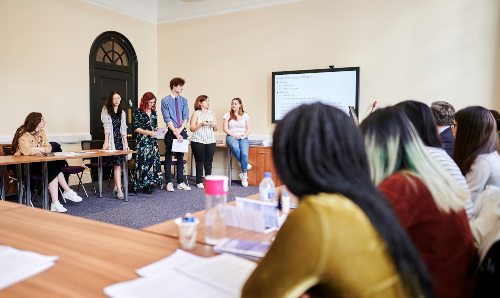
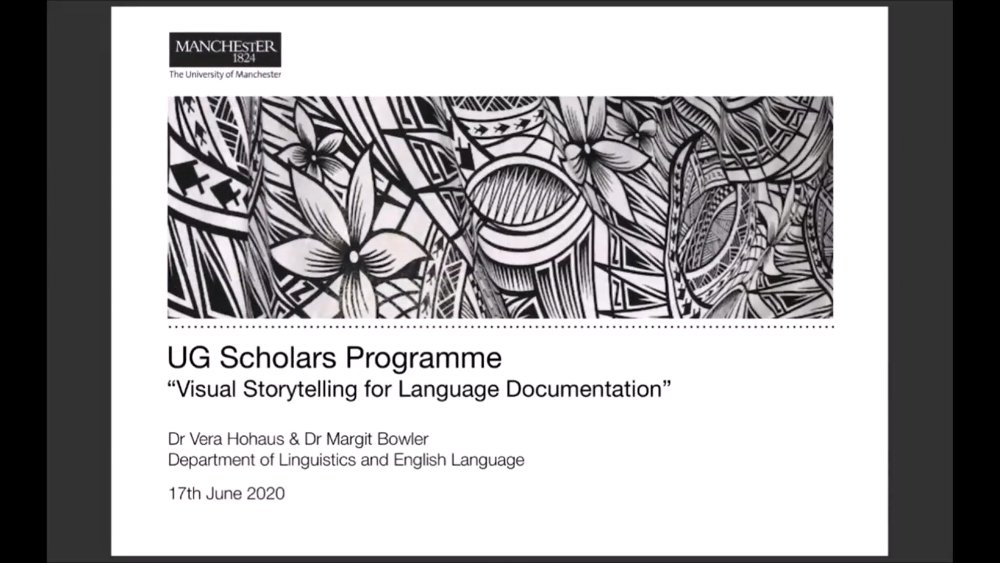
In this project, students were trained to develop, test, use and publicise visual storyboards for language documentation. It involved collaborating with speakers of languages spoken in Manchester to apply the developed storyboards and collect linguistic data, and supported students in honing their creative writing skills and linguistic insight. Moreover, this project gave students an opportunity to engage with the unique multilingual landscape that Greater Manchester has to offer, and also helped them learn about open access and the best practices for managing language documentation data. Students were also able to explore factors leading to language loss, the ethics of carrying out documentation projects in marginalised language communities and the pros and cons of particular documentation methods. The project was a huge success; the storyboards developed by the students are available for use in fieldwork, and the students also produced an article that they have submitted to a journal for publication.
Project Leads: Dr. Vera Hohaus and Dr Margit Bowler
Students involved in this project:Joseph Carroll, Alice Empson, Bayse Genc, Jiayin Ma, Megan Meunier, Zeng Qingcheng, Siena Peta Weingartz, Xiaoye Wu.
For more information, you can read a blog post documenting this project. You can also view the storyboards created as part of this project.
4. Researching and interpreting the University’s material heritage
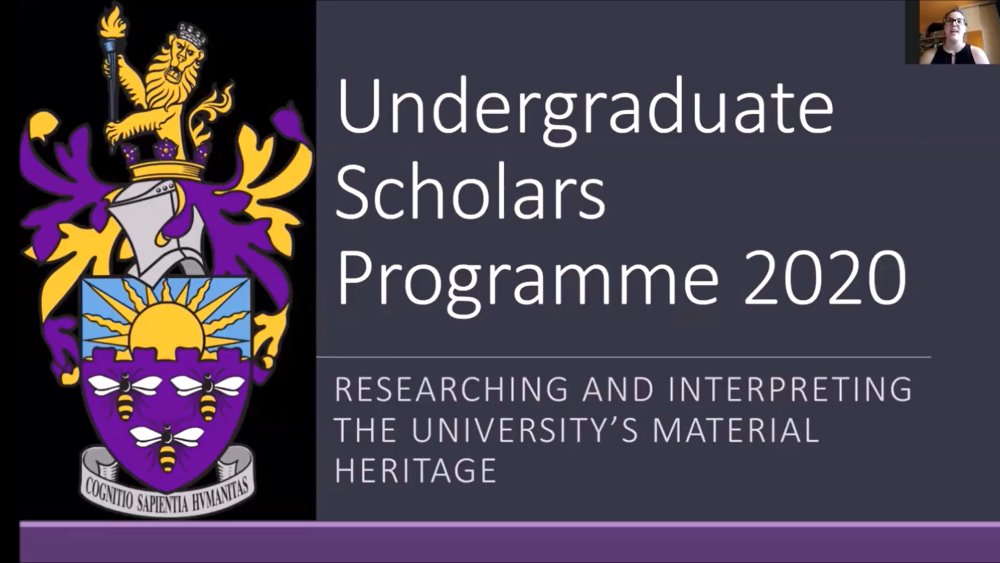
The University of Manchester holds an extensive collection of art and objects outside of the Manchester Museum and the Whitworth. Much of this collection is displayed around public areas of the University and includes portraits of figures from the University’s past and items used in teaching and research. This project enabled students to engage with some key concepts about material culture and its presentation to audiences and included conceptual, research and interpretative elements. The project also involved using the collections of the University on campus as a ‘living lab’ so as to enable the concepts discussed in the seminars to have real-world significance and relatability. Despite not being able to access archives in person due to COVID-19, the students were still able to research a group of objects, consider issues raised and devise a means for the items to be meaningfully interpreted in their current location.
Project Lead: Dr James Hopkins
Students involved in this project: Alba Carrasco Beldad, Emma Donington Kiey, Sara Kata, Jessica Reid.
View a PowerPoint outlining the findings of this project.
5. How the Story of Our Words Informs and Distorts Present Knowledge
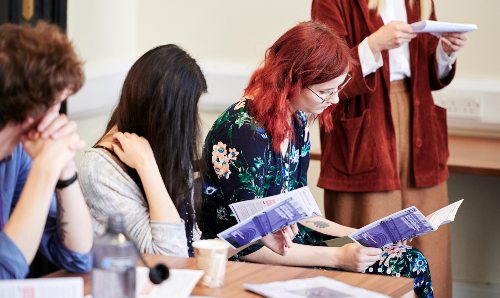
We often use words to justify scholarly and scientific knowledge, policy decisions or law, which can have surprising and revealing meanings in earlier generations, sometimes subverting the uses to which these words are put today. The students analysed the language used in political texts, namely the 2014 UK Immigration Bill, and how it contributed to the creation of meaning and context. This project involved selecting key unquestioned concepts and delving into their modern or earlier history. Students were able to enhance their ability to read contemporary documents critically by exploring the story of the words they use, and to engage with advanced methods in the critical, historically aware study of culture and power relations.
Project Lead: Professor Alexander Samely
Students involved in this project: Yang Chen, Demi Christofi, Nelly Gypkens, Sadia Waheed, Zixuan Wang.
For more information about this project, including its findings, download the document below